Wednesday, June 30, 2010

Sport's Drinks or H20?

This is an excerpt from a article on dehydration.  the article is fairly long so I took the part that I thought was most pertinent to what we do.  The link to the full article is below if you are interested in reading it, just a warning it has a lot of scientific terms! 


Preventing Dehydration: Sports Drinks or Water
Bob Murray, PhD, FACSM


Excerpt:
Promote rapid rehydration. The key to rapid and complete rehydration is to provide enough electrolytes in the rehydration beverage to serve as an osmotic impetus to restore and maintain extra-cellular fluid volume, including blood volume. And this depends upon ingesting both the fluid as well as the electrolytes that are lost in sweat. A study conducted in New Zealand helps to prove this point. During the experiment, subjects were asked to cycle in a warm room for three hours, ingesting on one occasion water and the other, a properly formulated sports drink. Results showed that plasma sodium levels were better maintained and less urine was produced when the sports drink was consumed.6 Why? The electrolytes in the sports drink maintained plasma sodium and served as an osmotic impetus to retain the ingested fluid by reducing urine production by the kidneys.
The NATA position stand also addresses this issue, stating that “consuming water alone decreases osmolality, which limits the drive to drink and slightly increases urine output. Including sodium in the rehydration beverage or in the diet allows fluid volume to be better conserved and increases the drive to drink.”1
Improve athletic performance. Decades of research confirm that sports drinks are superior to water at improving performance during both intense and prolonged exercise.7-9 The primary reason is that the carbohydrates in a sports drink provide fuel to both muscles and brain.
Ingesting a sports drink during exercise maintains blood glucose levels and promotes the uptake of carbohydrate into muscle cells. This in turn increases the use of carbohydrates as fuel by muscle and brain. Sustaining carbohydrate oxidation benefits performance in a wide variety of tasks, including maintaining motor skills in the latter portions of practice and games.
The NATA position stand is very clear in this regard, stating that “including carbohydrates and electrolytes in the rehydration drink can maintain blood glucose, carbohydrate oxidation and electrolyte balance and can maintain performance when the exercise session exceeds 50 minutes in duration or is extremely intense.”1
Full article:  http://www.gssiweb.com/Article_Detail.aspx?articleid=701&level=2&topic=5

Tuesday, June 29, 2010

Packing your lunch

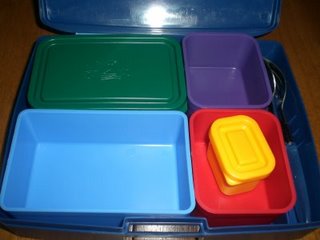
When checking log books I encourage people to pack their own lunch.  Many of the objections are completely reasonable-most people don't have time in the morning and who knows what to pack?  Preparing yourself for the day with boot camp and goal friendly foods is key to reaching those goals and feeling good.  At times, it can feel like showing up to camp is one of the easiest parts-making goal-supporting choices the rest of the day is what is often most challenging.  Well, friends, I pack a lunch everyday and have found some things very helpful.  My number one tool of choice is Laptop Lunches lunchbox (their site also has a lot of great lunch ideas, check the photo area.)  It has great little portion divisions and helps me remember what I'm trying to pack-when I've got an empty square I think "what am I missing?"  It also slides easily into backpacks, purses or messenger bags.  I have found laptop lunches at local health food stores but they're also available online.  Don't be turned off by the price tag -usually around $20- you will love it and use it every day.  What I like about this bento box style lunchbox is that it keeps the portions under control as well as keeps variety in my diet.

When preparing lunch I keep the following in mind:

  • color-as much as possible!
  • variety
  • fresh, non processed foods
  • use what I have-leftovers welcome
  • protein, fruit, vegetable
  • pretty. yes, I said pretty.  Pretty=appetizing.  

So here's what I put in it on a regular basis:

carrots
hard boiled eggs
diced apples with walnuts
laughing cow cheese
babybel light cheese
edamame
frozen cooked shrimp (thawed by lunch)
cucumbers
grapes with walnuts
peanut butter for dipping
homemade lara-like bars
green salad-lettuce, carrots, tomato
tomato & avocado salad
beets with crumbled goat cheese
egg salad with pita chips
greek yogurt (i mix with fruit or with dill for a dip for veggies)
tuna salad
black bean & corn salad
cous cous
texas caviar (field peas, garlic, red onion, black-eyed peas)
cherry tomatoes
pistachios

*it should be noted that the only meat protein I eat is seafood

Still don't believe me?  I started packing Melissa's lunch for her and she lost 9 pounds over about 3 months.  She's always done a good job with portion control but she was needing more fresh foods.  She'd been eating lots of frozen meals-Lean Cuisine, SmartOnes etc.-but she needed more variety and fresh foods-have I said that enough?

Happy Lunching!

Monday, June 28, 2010

Three Chili Shrimp - 20 Minute Recipes

Yield: 4 servings (serving size: 4 1/2 ounces shrimp and about 3/4 cup corn mixture)
Ingredients
3 1/2  teaspoons  sugar, divided
2  teaspoons  chili powder
1  teaspoon  ancho chile powder
1/4  teaspoon  chipotle chile powder
1/2  teaspoon  salt, divided
1 1/2  pounds  peeled and deveined large shrimp
5  teaspoons  olive oil, divided
1/2  cup  chopped onion
1/2  cup  chopped red bell pepper
2  teaspoons  bottled minced garlic
2  teaspoons  bottled minced ginger
1  (10-ounce) package frozen whole-kernel corn
1 1/2  tablespoons  cider vinegar
1/2  cup  chopped green onions

Preparation
Combine 2 teaspoons sugar, chili powder, chile powders, and 1/4 teaspoon salt in a shallow dish. Add shrimp to spice mixture; toss well to coat.
Heat 1 tablespoon oil in a large nonstick skillet over medium-high heat. Add 1/2 cup onion, bell pepper, garlic, and ginger to pan; sauté 3 minutes. Add remaining 1 1/2 teaspoons sugar and corn to pan; cook 3 minutes, stirring occasionally. Stir in vinegar; cook 30 seconds. Transfer corn mixture to a bowl; stir in remaining 1/4 teaspoon salt and 1/2 cup green onions.
Wipe pan with a paper towel. Heat remaining 2 teaspoons oil in pan over medium-high heat. Add shrimp to pan; sauté 3 minutes or until done, turning once. Serve with corn mixture.
Nutritional Information
Calories:  342 (25% from fat)
Fat: 9.6g (sat 1.5g,mono 4.8g,poly 2.2g)
Protein: 37.9g
Carbohydrate: 28g
Fiber: 3.7g
Cholesterol: 259mg
Iron: 5.3mg
Sodium: 569mg
Calcium: 114mg

David Bonom, Cooking Light, DECEMBER 2007

Friday, June 25, 2010

Maintaining your good habits during summer travel.

Hi!  Are you ready for summer?  Got your beach body rockin?  Do you find that it’s really challenging to stay on track while travelling – whether for business or pleasure?  Let’s talk about some strategies you can implement to keep you in the groove, and still enjoy your time away from home.

First, it depends on whether you’re flying or driving.  Let’s talk about the fabulous road trip first.  Start by planning ahead.  What time of day are you going to be leaving?  Before the sun comes up?  What are you going to do for breakfast?

Planning how your travel is going to go and preparing to feed yourself well around those logistics will increase your success.  It’s amazing the powerful impact a little forethought can have on the results you produce with your health and fitness efforts.  Becoming “thought”-full about it doesn’t really take that much effort, but the payback is fantastic!

Let’s say you’re going to road trip for 6 hours and you plan to hit the road at 6 a.m.  The night before, get your cooler set up to have in the car for the road trip.  In the morning, you just open the fridge and grab and toss the items you planned for and off you go!

If needed, go ahead and make your oatmeal, or a delicious baked egg casserole the night before so you can just heat, grab and go first thing in the morning.  Having that protein rich, nutrient dense breakfast is going to help you be more alert on the road and will also make it a snap to stay on track with eating clean and on time.

You grab your breakfast and throw your cooler in the car.  2 ½ hours into the trip, you’ve got your greek yogurt and granola snack along with some water.  2 ½ hours later, you’re able to make a nice sandwich with sandwich thins or ezekial break, some hummus, deli turkey and provolone cheese.  Snack on some carrot sticks with the hummus and you’re in great shape when you reach your destination.

While you’re settling into your accommodations, you can grab some fruit and cheese sticks and you’re satisfied til dinner time.

Eating out on vacation really is possible.  Every restaurant I know of has protein and veggies, right?  If you need to, pull items from a menu and ask your server to help you out – that you really just want some grilled chicken, steak or fish and steamed or grilled veggies plus a salad.  I have found most servers enjoy being the “master” of the kitchen and like helping me with my requests if special requests are needed.  Many restaurants won’t require any changes at all – you’ll just be able to pick your clean proteins and carbs from the menu and you’re on your way!  Tell them to take away that bread and butter if you can’t resist it, or the chips and salsa.  You’ll have a great sense of success when you take control of that and don’t sit there eating a days worth of calories in non-foods.

Dessert can be a request for fresh berries, chopped nuts and a side of whipped cream. (enjoyed sparingly!)

Won’t it feel great to get home from your trip and not feel that ugly bloated feeling?  To avoid having that dread of the scale?  Not wanting to put on your favorite pants because you’re not sure they’re going to zip?  You really can come home from vacation even feeling lighter than when you went if you do it right.  Plan time to truly relax while you’re there.  Try not to pack your schedule with so much stuff to do that you get home from vacation more exhausted than when you went!

If you’re flying, that’s a whole new world these days now that you are at the mercy of the airport and airlines for your food while in transit.  There are some great things you can plan for though to keep good food going every 2 ½ to 3 hours.

Since you can’t take food past the checkpoints, you will have to plan for what you’re going to get in the airport.  It is a bit of roulette, but you can do it!  There are usually newsstands in the airport that have bottled water, protein bars and fruit.  Grab some!  Depending on the time of day you’re flying and how long your flight will be, you may want to plan to buy a salad, or a meal to take onto the plane with you.  Again, you may need to enlist the professional assistance of a server to get good clean food to take with you, but I haven’t found the need to do that often in airports.  There are usually plenty of good restaurants that have good clean carbs and proteins to choose from.

Be prepared for those around you to be envious of your delicious food when you’re on the plane!  I kind of like th impact all of this has on our culture.  I like that the requests are being made at restaurants – they will begin to offer more and more good clean food choices the more we request it.  I also like that we can have an impact on those around us but demonstrating that it’s possible to still eat well, care for our bodies well while we travel.

Together, we can have a strong and positive impact on our culture.  Be part of the “cooler generation” and pack your cooler on your road trips.  Take it with you everywhere you can, for that matter.  When you’re in airports and can’t have your cooler, still stick to your guns and go for the cleanest food you can obtain.  It may require a little creative thinking on your part – but keep it simple.  Just ask yourself how you can get your hands on clean proteins and clean carbs and get them!

Now, once you reach your destination, make sure you have a refrigerator in your room!  Most places will put one there for you if the room doesn’t normally come with one in it.  Unload your cooler into it, and depending on the length of your stay and what you have on the agenda, go to the grocery store.  Most hotels have someone that will give you a lift to the local grocers and you can stock up on good clean choices.  Cheese sticks, deli meat, greek yogurt, fruit, carrot sticks, snap peas, green beans – love those dipped in hummus!  Hard boiled eggs, granola, cliff bars.  Whatever your favorites are – oh and plenty of bottled water.

I found at most training sessions or business conferences, the food choices offered throughout the day were really some of the worst things they could offer to try to keep you alert and functional.  Circumvent their lack of knowing and take your own stuff!  I actually did have an impact on 2 companies I worked for by consistently requesting better options and giving physiological reasons for my requests.  It’s your turn!  Ask for better.  Insist on it.  Take your own and impact those around you as well.

Bottom line, with a little thought, a little pre-planning, you can stay on track.  You can take great care of your body while you take it on the road.  It’s really pretty simple and easy to do.  It may be different for you to start with, but you already know what you get doing it the old way – you ready to see what happens when you try some new practices?

I hope so!  Enjoy your summer travels.  My wish is for you to have a great time and to come home light, lean and healthy!

Warmly,

Melanie

Wednesday, June 23, 2010

Hydration and Weight Loss


People who exercise may fail to meet the increased requirements
for energy, resulting in an adaptive thermogenesis (i.e., an
adaptation to the inadequate provision of energy) that improves
metabolic efficiency through an undesirable loss of fat-free mass.
In addition, energy and fluid intake are often mistimed, failing to
take full advantage of an eating and drinking paradigm that will
aid in fatigue resistance and attainment of a desired body composition
and weight. It is the objective of this article to help the
reader understand how eating small, frequent meals and consuming
fluid at regular intervals can sustain the hydration state and
avoid systematic shifts in within-day energy balance that could be
counterproductive to exercise performance and fitness.
                                        
                                                    - Dan Benadrot, PhD, RD, FACSM

Monday, June 21, 2010

Simple Marinades

With summer here and grilling in full swing, it is important to have a few simple marinades up your sleeve.  So here you go...

Chicken or Fish Marinade
1/2 cup olive oil
Juice of four lemons or limes (whichever you prefer)
1 tablespoon honey
2 tsp of kosher salt
1 tsp of garlic powder
Dash of pepper
2 tablespoons of parsley

Beef Marinade
3/4 cup olive oil
1/2 cup red wine vinegar
2 tablespoons of honey
2 tablespoons of barbecue sauce
2 tsp of kosher salt
1 tsp of garlic powder
Dash of Worcestershire Sauce
Dash of pepper

It is best to marinade the meat or fish overnight, but as long as you have a couple hours to marinade it is worth it! 

Wednesday, June 16, 2010

The Ins and Outs of Health Claims on Food Labels

Over the next few weeks we're going to try to give you a series of nutrition information that helps you navigate the nutrition terms you face when choosing foods in the grocery store.  

Ever wonder about the difference between reduced fat and low fat? Or does “light” on a label really mean no fat? The Food and Drug Administration has strict guidelines on how these food label terms can be used.

Here are some of the most common claims seen on food packages and what they mean:
  • Low calorie: Less than 40 calories
  • Low cholesterol: Less than 20 mg of cholesterol and 2 gm or less of saturated fat per serving
  • Reduced: 25 percent less of the specified nutrient or calories than the usual product
  • Good source of: Provides at least 10 percent of the Daily Value of a particular vitamin or nutrient per serving
  • Calorie free: Less than five calories per serving
  • Fat free/sugar free: Less than ½ gram of fat or sugar per serving
  • Low sodium: Less than 140 mg of sodium per serving
  • High in: Provides 20 percent or more of the Daily Value of a specified nutrient per serving
  • High fiber: Five or more grams of fiber per serving
  • Lean (meat, poultry, seafood): Ten grams of fat or less, 4 ½ grams of saturated fat and less than 95 mg cholesterol per 3 ounce serving
  • Light: 1/3 fewer calories or ½ the fat of the usual food
  • Healthy (individual food item): Low fat, low saturated fat, less than 480 mg sodium, less than 95 mg cholesterol and at least 10 percent of the Daily Value of vitamins A and C, iron, protein, calcium and fiber.
The FDA also sets standards for health-related claims on food labels to help consumers identify foods that are rich in nutrients and may help to reduce their risk for certain diseases. For example, health claims may highlight the link between calcium and osteoporosis, fiber and calcium, heart disease and fat or high blood pressure and sodium.  

Followers